Recap of TC105: Mobiles for International Development
The recent four-week online certificate course on TC105: Mobile Phones for International Development was our largest and most diverse class to date with 70 participants from 32 countries. Given the immense demand we’ve decided to run it again this summer for those that missed out on this one. Sign up now
TechChange to Host Digital Organizing Twitter Chat on Friday April 27th
Description:
The campaign to #StopKony is approaching a critical transition. On April 20th Invisible Children will launch its Cover the Night campaign on the heels of one of the most successful viral videos of all time.
Moving forward from online ‘awareness-raising’, in which over 85 million people viewed their video Kony 2012, Invisible Children is now asking their supporters for something more – offline action. Regardless of your position on the efficacy and appropriateness of the campaign, the upcoming Cover the Night will be an important event in the short history of digital activism. How will Invisible Children translate a resounding marketing success into tangible action? What does this mean for the greater advocacy community?
As a precursor to our course on digital organizing and good governance, TechChange plans to host an open twitter chat to reflect on the campaign and its successes and approaches to date.
Date: Friday 27th at 1:00pm EDT
Key Questions:
1. One of the biggest criticisms of Kony2012 was that it oversimplified the history of conflict in central africa and the mechanisms needed to create change in the region. How do organizations handle conflicting demands of delivering a message in an accessible way vs attending to complexity and nuance of an issue?
2. Invisible children was clear that Kony2012 Cover the Night was not intended for policymakers or for affected communities in central africa, it was targeted towards US based activists. Should organizations/campaigns segment or customize messages and actions for different target audiences and how might they do this effectively?
3. Kony2012 proved the power of viral video in getting the attention of tens of millions of people. How do organizations successfully translate online activity into meaningful offline action? how do they sustain success?
Hashtag: #TCTalk
Be sure to participate in the chat by logging on twitter on Friday April 27th between 1 and 2pm EDT. Please remember: use the #TCTalk hashtag, introduce yourself, stay on topic, be respectful and have fun. This discussion will be part of TechChange’s monthly twitter chat, which are real-time conversations structured around specific themes.
Have a question but can’t attend the chat?
Mention @TechChange before the chat with any questions you have or issues you are interested in exploring – or just comment right here on TechChange Blog. We’ll do our best to include this feedback in the chat.
Sample Tweet: Join @TechChange for a twitter chat discussing #Kony2012 and Digital #activism on April 27th 1-2pm. Use #TCTalk http://bit.ly/JcwMm9
Interested in continuing the conversation further and engaging with other activists across the globe? Be sure to check out TechChange’s upcoming online certificate course, TC104 Global Innovations for Digital Organizing: open data, good governance, and online/offline advocacy. This course will evaluate case studies where new technologies have been employed for effective change and what factors and contexts are most influential on outcomes. More information can be found at TC104 course description page on the TechChange website.
Three Tech Advances That May Lead to a More Equitable World
This article was first published on the The Asia Foundation’s blog, In Asia.
“Just because they are poor and isolated doesn’t mean they don’t have the potential to be the next Bill Gates,” said Shahed Kayes, the founder of Subornogram Foundation in Bangladesh, while introducing me to lively students at a school he started on the remote island of Mayadip. Located in the Meghna River, the island’s 1,100 residents don’t have access to public services such as safe drinking water, public schools, or health care. The residents rely on the river’s catch of fish for their livelihood, and 97 percent live below the poverty line. Although the school doesn’t own a single computer and the island has no electricity, Shahed couldn’t resist taking out his personal laptop and showing the children how to use it, giving them at least a small glimpse of the world beyond their shores.
Taking Stock and Saving Lives: How an mHealth Initiative Is Revolutionizing Healthcare in Uganda
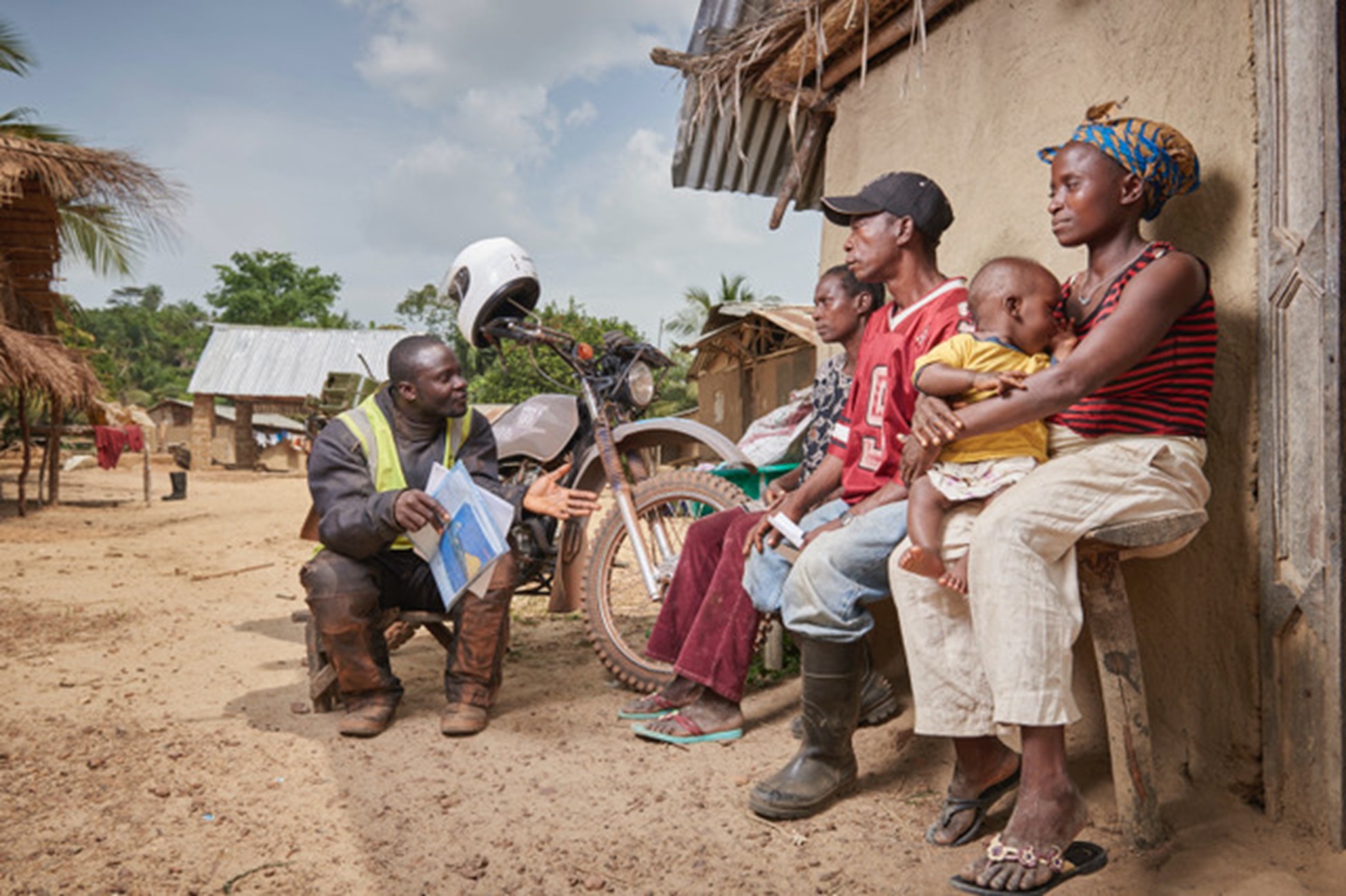
Until recently, most health clinics in Uganda, and indeed across the continent of Africa, transmitted all of their data manually, sometimes by phone, but in most cases by sending messengers overland to each clinic — big, small, urban and rural — to collect paper records for analysis. This process is critical to verifying that medications are stocked on site and can be distributed in a timely fashion to patients most in need. It is also imperative in ensuring that Uganda’s health policy decisions are made based on the most up to date and accurate information.
But the journey of a paper record from doctor’s pad to the Ministry of Health in Kampala was treacherous at best. From extreme distances to challenging terrain and unpredictable transportation – collecting data the old fashioned way proved to be a time consuming, inefficient and expensive endeavor. This scenario caused health providers to learn about supply shortages only after it had become a relative emergency, hindering efforts to effectively respond to diseases prevalent in the region, such as malaria, HIV, and TB, among others.
One Healthcare implementer facing such data collection problems was the consulting group Cardno, and their Uganda Health Initiatives for the Private Sector (HIPS) project – a program funded by USAID, and administered through partnerships with over 100 private sector health clinics across the country. According to HIPS’ director of partnerships Barbara Addy-Witte, “[data collection] was a very cumbersome process for us. HIPS tracks data from 112 clinics and this often necessitated partner staff to travel to the project office in Kampala to deliver the data forms each quarter.
Working closely with USAID, HIPS faced the challenge of collecting upwards of 90 data points from each health clinic every quarter. With manual data collection and paper management, the HIPS program found these processes to lead to low collection numbers. And as any good project manager knows, low data collection numbers and compromised records can lead to the lack of ability to maintain the most efficient and effective operations. However, a recent partnership with the Denver based mobile technology group access.mobile has the potential to change the operational capacity of health providers in the region, with one of the most basic modern communication devices at the center of operations – cell phones.
The access.mobile team, led by Founder Kaakpema Yelpaala (KP), an American social entrepreneur of Ghanaian descent, has designed a mobile data collection and analytics system based on an SMS platform to electronically track priority health indicators, monitor stock levels of antiretroviral drugs and support organizations in understanding their data. This m-Health initiative, which uses full keyboard feature phones to send and receive information, has been rapidly scaled up for piloting in 70 health clinics in just three months. It was determined by HIPS that just over 30 of their clinics, mainly urban sites, had sufficient connectivity to send their reports electronically, though the overwhelming majority were not in that position.
But not only is access.mobile working to develop scalable technologies for improved communications in the region, the model of development is one based on local ownership and long-term sustainability. According to KP, “Uganda particularly is a place with a ton of talent in the technology sector. All of our employees in Uganda are from Uganda. They’re trained in mobile technology, computer science, and medicine. They’re the linchpin to our company’s success because they understand the context. They understand how Ugandans think about technology. It’s when you blend a local team like that with a global team like ours – that’s when you get innovation.”
Dr. Dithan Kiragga, the Chief of Party of the HIPS initiative: “The commodity supply chain in particular for ARVs has been a challenge. This partnership presents an opportunity to improve the commodity flow, to develop an alert system that triggers a request when the stocks are low. This ensures that there are no stock outs for priority drugs.”
With Cardno’s Uganda HIPS working towards the end of the fully-scaled pilot phase of the access.mobile solution, results of the financial and social impact of their work will be generated in the coming months and a better picture of their work will emerge. Furthermore, as the Ministry of Health in Uganda sets standards for data integration at the national level, solutions like access.mobile’s will also be an important element in helping engage the private sector with national health information management efforts.
As it stands however, the nascent m-Health industry has made significant headway toward strengthening supply chains, better depicting public health scenarios on the ground, informing good policy, and ultimately helping to improve the health of millions of Ugandans.
Post authors Kevin Malone and Greg Maly are working with TechChange for the online course: Global Innovations for Digital Organizing. They are happy to continue the discussion @TechChange.
Presenting at Tech4Dev in May!
Thanks to TechChange resident conflict analysis and data guru Charles Martin-Shields for cross-posting this from his site Espresso Politics. We’re really excited for this to be presented at Tech4Dev!
Hey everybody, I’m pretty excited to have had a paper accepted to the Tech4Dev conference hosted by the UNESCO Chair at the Ecole Polytechnique Federale de Lausanne. I’ll be focusing on the impact that distance learning technology can have on knowledge co-creation across geographic boundaries, with a particular focus on technology applications for development and peacebuilding. If you’re curious, I’ve got a draft of the paper stored here. As usual, feedback is welcome, and I have to give a big shout out to my co-author Jordan Hosmer-Henner (@jordanhh) who is the resident open-source tool guru at TechChange and soon-to-be master of arts at the Elliott School of International Affairs. If anyone has knowledge of fun things to do in Lausanne, leave a comment with your recommendation!
Announcing TechChange/GeoPoll SMS Simulation in Tunisia!
We’re excited to announce that GeoPoll will be running a live mobile SMS poll in Tunisia for our upcoming course Mobiles for International Development!
GeoPoll will create a pilot survey that leverages the experience of its 70 mobile health professionals around the world in TC105 to explore how Tunisian civil society organizations can better leverage mobile technology in mobile health, finance, and education.
GeoPoll is currently working with civil society organizations such as I Watch to conduct a five month 15,000-respondent a month survey on issues of democracy and perceptions related to the political transition. Other recent initiatives in Tunisia include a general health survey to better understand 2,000 Tunisians’ access to health facilities. In a variation to a typical survey, the day before the first election post the Ben Ali regime, NDI used the GeoPoll platform to conduct a nationwide voter education campaign. The effort educated people ages 18-70 through “Do you know…? “ style surveys on the elections that were happening the next day. The survey reached over 3,000 Tunisians in all 24 Governorates, educating them on key issues such as their political rights and where to vote.
Students will submit questions by Friday, April 6, after which they will be translated into French and asked to 300 respondents around Tunisia in the following week. Although the poll will be small in relation to other surveys, it will help GeoPoll better understand areas of interest to mobile technology professionals.
All relevant data will be released at the end of the class to inform mobile phone programming in Tunisia and around the world.
This isn’t our first experience with GeoPoll. We’ve also run them for our course in Pakistan where we integrated results from the DRC with Ushahidi to have students do their own CrowdMap simulation in DRC. You can read more about it in this IREX blog post.
But, we don’t believe that the only true purpose for GeoPoll is classroom simulations. Learning what audiences think in areas of the world where traditional polling methods are often expensive and slow (if even possible) by reaching them instantly on their mobile phones has tremendous implications. We’re also working with various partners to look at how GeoPoll can be used in fragile states like Yemen and Afghanistan, which we’ll be featuring in our upcoming course on Technology for Conflict Management and Prevention.
From Caring to Doing: The Responsibility of Experts for #StopKony
This article has been reposted from the Huffington Post. Read the original article.
By: Stephanie Rudat, Kevin Malone, and Christopher Neu
“It may have been just noise to you and inspiring for someone else, but at the end of the day, it’s still a waterfall.” – Modified anonymous quote via Facebook
A Challenge to Experts and a Call for Productive Engagement
The controversy surrounding the Kony 2012 campaign (nearly 80 million views) has focused primarily on the responsibility of activists to understand the conflict in Uganda, communicate it honestly to their audience and advocate for constructive solutions. Equally as important, however, is the responsibility of recognized experts (of academic, professional or personal experience) to positively engage an expanding international audience interested in human rights and Africa — an audience that is potentially now nearly three times the size of Uganda itself (33 million). While there has emerged some constructive criticism on the content of the video and purpose of the organization (e.g., here and here), these have been outnumbered by arguments that shut down the possibility of channeling this new found enthusiasm for good.
But if the primary argument against this video is that the road to hell is paved with good intentions, it holds true for both activists and experts. Most critics from the expert community do themselves and their cause a disservice by relaying hyperbolic and unhelpful criticism.
To be sure, there is a conversation to be had about the role of the West in development, transparency in funding and the purpose of advocacy organizations. But the conversation needs to occur in a manner that does not turn people away from participating in causes greater than themselves to affect positive change.
Whether rightly or wrongly, Invisible Children has made it cool to care about Uganda. Perhaps the organization and its work speak to you, perhaps it doesn’t. What is certain is that there is currently unprecedented enthusiasm among the people whom Kony 2012 spoke to – the young. This is a critical opportunity to engage them and to help channel their enthusiasm to learn more and be better global citizens. And they don’t deserve to be criticized for caring.

Someone Who Knows vs. Someone Who Cares?
The terms “activist” and “expert” are better understood as overlapping identities instead of mutually exclusive positions. Activists are often well informed on their pursuits and experts are among the most passionate for affecting positive change. An activist acts with the intention to affect positive change, while an expert has the necessary qualifications to do so. With that understanding, the threshold to become an activist could be considered low (including “slacktivist” behavior such as sharing a video or buying a bracelet), while the threshold for an expert is significantly higher. But experts do not just appear out of nowhere — they have to start somewhere on the ladder of engagement.
There is understandable skepticism on the value of counting viewers of online videos as activists and raising awareness for a solution with which one does not agree. Fair enough. Let’s look at it another way: Where do experts come from?
If you consider yourself an expert on a topic or region, you most certainly started at a point of curiosity, perhaps a college campus. You probably watched or read something that got you fired up about a particular issue in another part of the world. Then you researched, visited the area, talked with those affected and realized that it was much more complex and nuanced than you originally thought.
What if right now there are 100 million potential more yous out there, seeking your guidance? Let’s settle on 10 million and still be amazed. If just one in one hundred of those 10 million seek out the education, experience and nuance, we are now left with a cadre of passionate and involved 100,000 experts — impressive by any measure. The bottom line is that the inspiration has been served.
You might say, “If I knew then what I know now…” But that’s exactly it: You may never have started, especially if a respected peer attacked you for being involved. Since you do know far more now than you did then, this may be your chance to help others skip some painful learning experiences in the process. Actions do matter more than intentions, but the intention to inform the debate from your perspective is not enough; it has to be done responsibly. If you are criticizing because you care about the future of Uganda, then please care enough to do so in a manner that keeps the conversation going.
What Can Be Done Right Now: Partnerships between Knowledge and Influence
The simple solution is to encourage civilized dialogue. However, a brief scan of the comments sections throughout the blogosphere would scare away even the most knowledgeable and well intentioned critics and activists. Civility is an important lesson but only part of the problem. Central to the argument critics take is the lack of the ability of those newly interested to understand the concepts at work.
Here is the opportunity to engage, to educate, innovate and to democratize the “expert knowledge.” It is imperative on us to ensure that the work that experts do resonates with the next generation of citizen activists, philanthropists and voters.
One such solution would be to encourage think tanks and advocacy organizations working on high-level or “complex” matters to team up with the organizations with strong will and social marketing strengths.
One example, “Exploring Humanitarian Law,” is a toolkit developed by the American Red Cross for use by educators and youth leaders to teach the principles of international humanitarian law (a “complex” issue) in the classroom. Projects such at these are designed to bridge the information gap and create a future of well informed adults, whether they become activists or not.
There is a lesson to be learned here: combining the knowledge produced by high level advocacy organizations with the incredible reach of Invisible Children’s recent campaign will yield a potent mixture of knowledge and power. This combination and could shape the arena in which America’s young adults learn the tools and knowledge that will inform a more productive and positive relationship with not just Uganda, but the rest of the world.
Moving Forward: Training an Expanding Conversation
With the expansion of media production and dissemination evidenced by Kony 2012, it’s no longer possible for the expert community to keep the activists out of this complex conversation. Attempting to do so will only dampen valuable enthusiasm or create disastrous disconnects between doers and thinkers. The only practical response is for experts to positively engage this expanding global dialogue and to teach the conversation upwards.
Activists are still responsible for their message and will unquestionably benefit from expert scrutiny. But right now there are potentially hundreds of millions of youth interested in Uganda and hungry for guidance. They may not be there tomorrow unless we are willing to engage.
Co-authors: Christopher Neu and Kevin Malone are facilitators TechChange for the online course: Global Innovations for Digital Organizing. Chris and Kevin have differing perspectives on the current value of the #StopKony campaign, but are excited about the potential impact for social media and human rights. They’re happy to continue the discussion @TechChange.
Follow Stephanie Rudat on Twitter: www.twitter.com/SRudat
Launching our Ushahidi Course
Today we are excited to announce, in conjunction with our friends and colleagues at Ushahidi, one of our first new 200-level courses: Ushahidi: Frameworks for Effective Platform Management, a four-week, online course running this summer from June 4th – 29th.
What has us most excited about this course is our approach toward one the highest-profile and most utilized programs in the current generation of ICT4D tools. Working closely with Patrick Meier, Ushahidi’s Director of Crisis Mapping and Strategic Partnerships, and Heather Leson, Director of Community Engagement, we’ve developed a syllabus that focuses both on building confidence in using the Ushahidi platform as well as putting equal attention on essential logistical issues like building trust networks, bolstering security and privacy, and generating effective, actionable data.
“Ushahidi collaborates on a number university courses focused on either Ushahidi software development, research or project work,” said Leson. “The TechChange course offers more access to various community leaders and a holistic participatory process which will complement our Ushahidi programming, inform existing knowledge (wiki.ushahidi.com) while growing the community of deployers. Someday these people will mentor others to make map change around the world.”
As with all our courses, we’re inviting several guest experts to join us in creating a space to discuss these principles, learn from existing case studies, and apply best practices toward new ideas and programs, including members of Ushahidi’s core team.
About the Course
Our lead moderator for the course is Rob Baker, TechChange’s Director of Training and Strategic Partnerships, who facilitates our online course on Tech Tools and Skills for Emergency Management. Rob has worn many hats working with Ushahidi, including being project and/or technical lead for over a dozen deployments around the world, conceived and co-developed the first iteration of the Ushahidi Community website, is the first inductee into their Trusted Developer Network, was Director of the Universities for Ushahidi program, and has spoken at several events, conferences, and universities on behalf of Ushahidi including the World Bank, US State Department, MIT, and Harvard University.
As this will be our first 200-level course, we are proud to offer a discounted rate of $395 with an early-bird rate of $295 for those registering before May 4th, which is lower than other TechChange offerings.
If you think this course is right for you or your organization, please check out the details at our course page. Should you have any questions, please don’t hesitate to contact us anytime.
We look forward to hearing from you and hopefully working with you this summer.
ICTD 2012
This post is cross posted from Charles Martin-Shields’, TechChange’s Director of Conflict Management and Peacebuilding Programs, blog Espresso Politics.
Just got back from ICTD 2012 down at Georgia Tech, and am excited about the state of the field. This conference is a gathering for academics and practitioners working in the international development and technology spaces. We got to see talks about everything from mapping to public health, mobile phone applications and new open source software. The keynote speaker, the Honorable Omobola Johnson, the Minister of Communication Technology in Nigeria, provided participants with an insightful and inspiring look at Nigerian ICT policy. Nigeria’s efforts to integrate ICT’s into cross-sectoral governance were highlighted and it’s clear that their strategy is robust as technology continues to play an expanding role in governance and peace.
A few highlights:
- Ramine Tinati‘s model for tracking and studying interactions and group development in the Twitterverse. What his model does is show us who the important actors between groups are; while someone might have thousands of followers, what he is finding is that the people who are actually propagating ideas are often unknown users who have shared interests and are retweeting information between the users with large followings. From a conflict analysis perspective, this could be valuable research because it can help practitioners and policy makers identify the actors who can link two thought leaders and spur new ideas or action.
- Thomas Smyth and Michael Best’s Aggie software, developed at Georgia Tech, which can analyze social media streams and has been used to track information during elections. The software allowed a user to filter information, tag valuable data and track patterns in the social networking space.
- IREX’s Paul-Andre Baran came over from Romania to attend and pointed me to a mapping project in Romania called BursaSpagilor, which is an open source map where users can upload information about where they paid bribes and how much they spent. He explained that bribery was an accepted part of life in Romania (even if it’s illegal), so the idea was to create a market place where consumers of services could see what the competing rates were for different services in different locations. While this could be collected and used for prosecution, what was even cooler about it was that the program itself might eliminate the need for legal action. If services providers know that they are competing for customers and that their bribe is being undercut by a competitor, they will bribe less to keep their customers. This creates a downward spiral, drastically reducing or possibly eliminating bribery.
These were only three of the many cool papers and products presented at the conference. The fail faire was also fantastic, and a great deal of learning was done as we all discussed our mistakes and lessons learned working in the ICTD field. I’d strongly encourage anyone working in this space or interested in what is happening with technology and social change to attend the conference next year. It’s going to be in Cape Town during the Southern Hemisphere summer, so if nothing else it’s going to be a fantastic location!
If you’re interested in what is happening with technology for governance, transparency, conflict prevention and peacebuilding, mobiles for development check out our upcoming courses: “Mobiles for International Development”, “Global Innovations for Digital Organizing”, and “Technology for Conflict Management and Prevention”
Look But Don’t Touch….Yet: Internet Activism in #TimorLeste
This is a guest post from Laura Ogden, an alumna of our course, TC104: Global Innovations for Digital Organizing. If you’re interested in learning more about using technology for democratic change we’re running the course again in May.
‘I don’t have an email address at the moment. Can you send me the new finance policy on Facebook and I’ll drop in my signed copy to the office next week?’ This modern-day utterance came not from the secretary of a high-school prom organizing committee, but rather from the youngest Board Member of Ba Futuru, Timor Leste’s preeminent peace building and human rights organisation*.
Whilst this seemingly bizarre request might be interpreted as an encouraging – or amusing – sign of the times, where Internet and social media are penetrating business in all its forms across the globe, our Facebook-friendly Board Member is in fact an anomaly in Timor Leste, which continues to be Asia’s poorest country, after more than a decade of independence, billions of dollars in foreign aid, and years of UN administration.
In a country where (relatively) reliable Internet costs $1-2 an hour (on top of an initial $90 layout for the USB modem) and yet where national GDP was just $594 last year, it’s little wonder that the internet penetration rate in Timor Leste hovers around 2%, eleven years after the first internet connection was established in 2000 by the United Nations Development Programme (UNDP). Read More